The 2026 FIFA World Cup is expected to be one of the largest sporting events in history.
With matches scheduled across 11 U.S. host cities plus 20 official Team Base Camps in the U.S. and millions of international visitors anticipated throughout the tournament, healthcare organizations may experience temporary shifts in language access demand as fans, media, support staff, and team personnel travel between host communities.
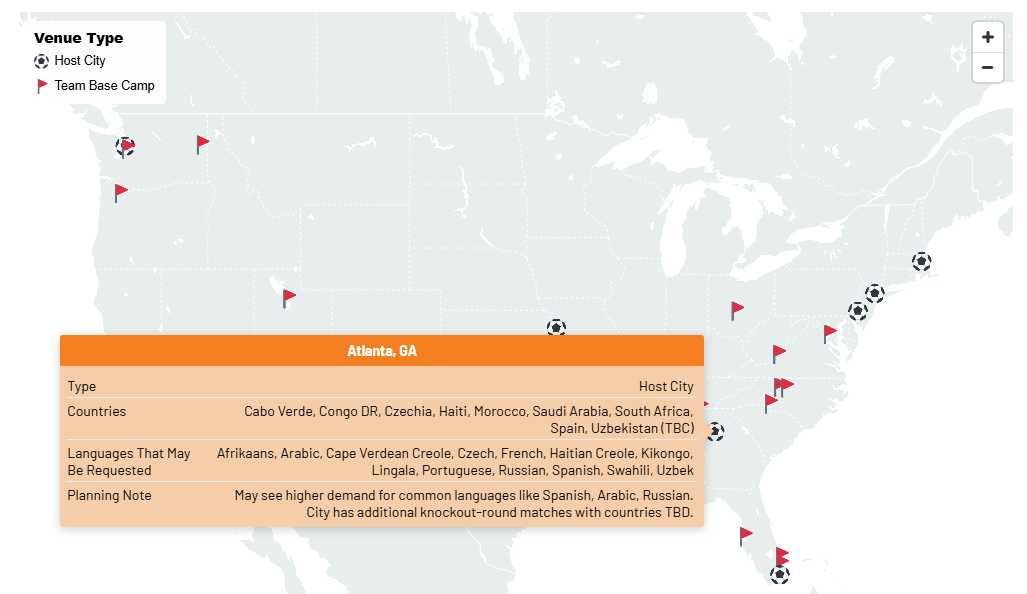
To help organizations prepare, Martti conducted research into World Cup host cities and team base camp communities, participating countries, and the languages associated with those countries. The result is our new 2026 FIFA World Cup Language Access Planning Map, an interactive tool designed to help healthcare leaders identify languages that could see unusual demand during the tournament.
Why Language Access Planning Matters
Healthcare organizations routinely prepare for seasonal fluctuations, local events, and emergency situations that can impact patient volumes.
The World Cup presents a different challenge.
Unlike most major events, it creates the potential for significant international travel concentrated in specific metropolitan areas over a relatively short period. Hospitals and health systems located near stadiums, transportation hubs, hotels, tourist destinations, and fan gathering areas may encounter more patients who speak the non-English languages commonly represented in the area and patients who speak languages that are not commonly requested in their communities.
Even a modest increase in demand for less frequently encountered languages can create operational challenges if interpreter resources are not readily available.
This is particularly important as organizations continue strengthening compliance efforts and preparing for evolving language access expectations.
How We Built the Map
Our team reviewed:
- 2026 FIFA World Cup host cities and team base camp communities
- Participating countries expected to play matches in those locations
- Common, official, and widely spoken languages associated with participating countries, fan communities, and anticipated international travel patterns.
We then mapped those languages to individual locations to provide a city-specific planning view.
Not every host city was associated with additional languages through participating-country analysis. However, every U.S. host city and team base camp community is included in the map because all host communities are expected to experience increased domestic and international travel during the tournament.
The tool allows healthcare organizations to quickly identify:
- Which countries are expected to be represented in a host city
- Which languages may accompany those visitors
- Potential language needs that differ from a facility's typical demand patterns
The goal is not to predict exact interpreter volume. Instead, the map helps organizations ask better planning questions before the tournament begins and as it develops.
View the 2026 FIFA World Cup Language Access Planning Map >>
Research Is Only Part of Preparation
As part of this project, Martti reviewed projected language demand across host cities and evaluated interpreter coverage for the languages most likely to see increased utilization during the tournament. This proactive approach helps ensure that our client healthcare organizations have access to qualified interpreters even as language demand patterns shift.
Healthcare providers should take a similar approach by reviewing:
- Current interpreter utilization data
- Languages with limited existing coverage
- Emergency department workflows
- Escalation procedures for uncommon languages
- Vendor capacity and availability
Don't Focus Only on Match Participants
One important consideration: language needs during the World Cup will likely extend beyond the languages represented by participating teams.
Large international events attract tourists from around the world, regardless of whether their home countries are competing. Host cities may also experience increases in domestic travel, international business activity, media presence, and tourism-related employment.
That means healthcare organizations should view World Cup language planning through a broader lens.
The languages highlighted in the map represent a useful starting point, but organizations should also consider:
- Existing community language needs
- Historical interpreter utilization data
- Tourism patterns
- Airport and transportation traffic
- Local event schedules
- Regional demographic trends
- Cross-nationality and cross-language fans
Fan travel patterns do not always align with official team languages. Many globally recognized teams attract supporters from countries and communities that speak entirely different languages than the teams themselves.
As a result, healthcare organizations should not assume that language demand will mirror the official languages of participating nations. Widely used languages such as Spanish, Arabic, Portuguese, Russian, and ASL may see increased utilization across multiple host cities regardless of which teams are scheduled to play there.
Building a More Resilient Language Access Strategy
The most effective language access programs are built to handle both routine demand and unexpected surges.
As the World Cup approaches, healthcare leaders should evaluate:
- On-demand interpreter availability
- Coverage for less common languages
- Emergency department workflows
- Telehealth language access capabilities
- Staff awareness and training
- Language identification processes
Organizations can also compare potential World Cup-related demand with existing local LEP trends. Check out Martti’s other resources to help you understand and review your organization’s baseline language needs.
What Healthcare Organizations Should Be Doing Now
Leading healthcare organizations are already evaluating how major events could impact language access operations.
Several common themes have emerged:
Workforce Planning
- Reviewing interpreter staffing levels
- Identifying opportunities for overtime, PRN, and contract support
- Establishing on-call procedures for surge periods
Vendor Readiness
- Confirming language service provider surge capacity
- Reviewing escalation procedures for urgent requests
- Evaluating coverage for less-common languages
Translation Preparedness
- Identifying frequently used patient-facing materials
- Pre-translating critical documents into priority languages
- Establishing expedited workflows for urgent translations
Operational Readiness
- Reinforcing staff education on language access procedures
- Reviewing emergency preparedness plans
- Ensuring providers know how to quickly access interpreters during periods of increased demand
The organizations best positioned for success are taking steps now to ensure language access remains reliable even during periods of extraordinary demand.
Explore the Interactive Map
Our new 2026 FIFA World Cup Language Access Planning Map provides a simple way to check potential language demand patterns by host city and ensure your organization is ready to deliver equitable care to every patient who walks through your doors.
View the 2026 FIFA World Cup Language Access Planning Map >>
Is your organization prepared for the language access demands that major international events can create? Explore the map, review your interpreter utilization trends, and talk with a Martti language access expert about strengthening coverage.
Sources & Methodology
This resource was developed using publicly available 2026 FIFA World Cup information, participating-country data, anticipated fan travel patterns, and language research.
Sources include:
- 2026 FIFA World Cup host city information
- FIFA Circular No. 1797, Amendments to the FIFA Statutes – Official FIFA Languages
- Publicly available country language data
- Martti analysis of participating countries, host cities, and projected language access considerations
About the Author