How Corewell Health Is Building a Unified Model for Language Access
Learn how Corewell Health is aligning its language access approach across 21 hospitals to strengthen safety, quality, and health equity.
SUMMARY
Corewell Health’s approach to language access includes:
Shared policy development: Language access leaders across three regions are aligning key policies, including vendor use and bilingual staff testing standards
Centralized visibility into spend: Invoicing and translation costs are centralized within a single cost center, providing a clearer view of language access spend
Operational insight across regions: Utilization patterns help teams understand how language access is used across regions
People-first foundation: Every initiative is grounded in one belief: every person deserves to understand their care
Every healthcare leader feels the weight of transformation right now.
For Corewell Health, transformation started with the merger that brought together Spectrum Health and Beaumont Health, incorporating the Lakeland region in southwest Michigan, forming Michigan’s largest health system, united by a commitment to equitable, connected care.
Fast Facts
21 hospitals and 3,000+ outpatient locations across Michigan
65,000+ team members, including 12,000+ physicians and advanced practice providers and 16,000+ nurses
Priority Health, Corewell Health’s provider-sponsored health plan, serves 1.3 million+ members statewide
Recognized among America’s Greatest Workplaces for Inclusion & Diversity 2025
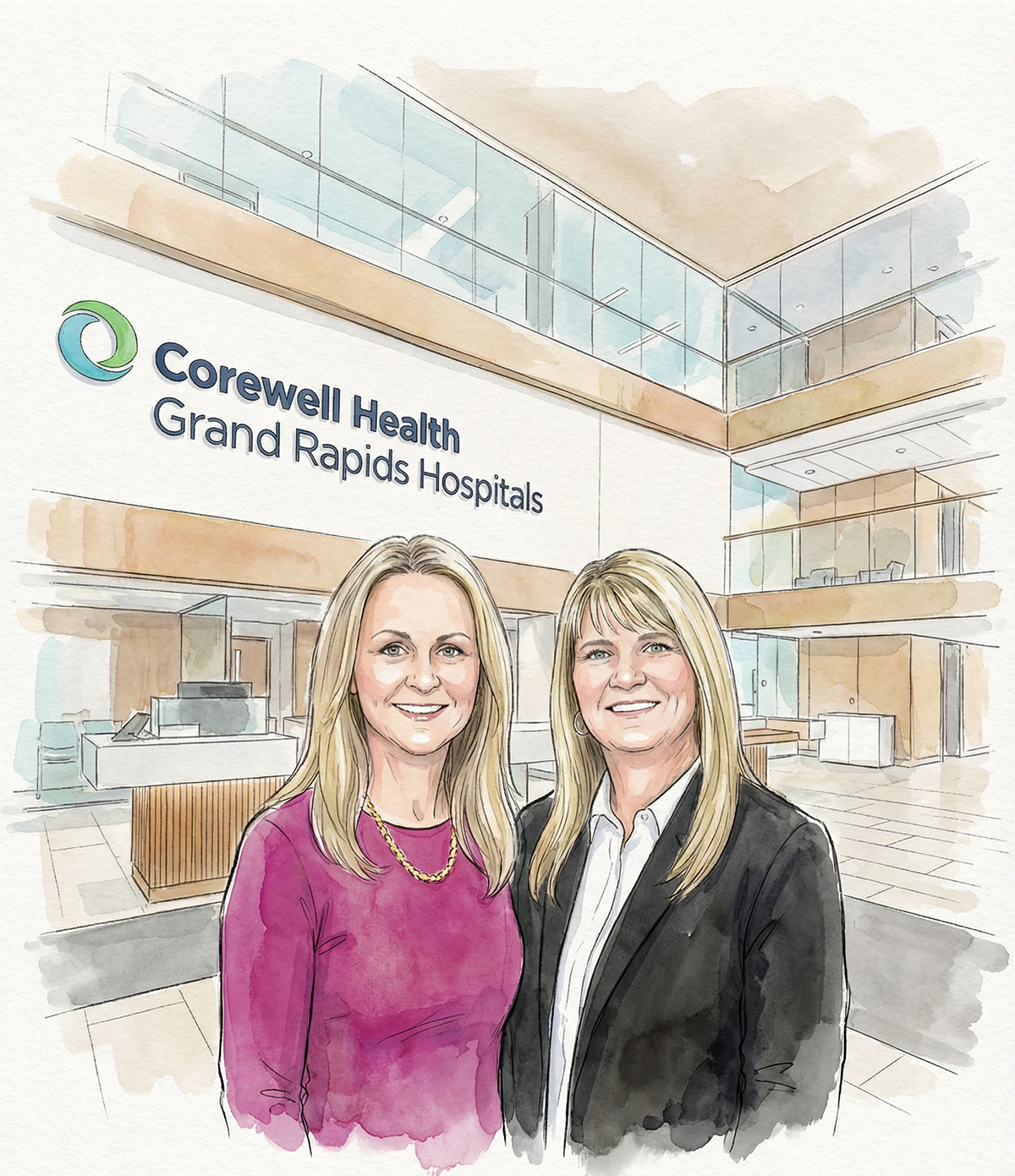
At Equiti’s Fall 2025 Language Access Leadership Webinar Series, Suzette Proctor, Senior Director, Patient Flow and Capacity Management for Corewell Health and CHW Language Services, and Vahida Kajtazovic, Language Services Manager, shared how Corewell Health is approaching language access alignment as part of the broader integration.
A Health System in Transition
Mergers test everything: workflows, culture, and communication.
For Proctor and Kajtazovic, language access sits at the center of that change.
“Language services are part of the heart of health equity,” said Proctor. “As we integrate three systems into one, we’re ensuring that every patient, no matter their language, has access, understanding, and clarity of care.”
Across Corewell Health’s regions, language access looked different prior to the merger.
Some hospitals had established in-house interpreter teams, while others leaned on vendor support; some relied more on face-to-face interpreting, and others leaned on remote interpreting. These differences reflected regional needs, patient populations, and existing operational models.
“Each region operates somewhat differently,” Kajtazovic explained. “Our goal is to bring all of that experience and expertise together, to share the wealth of knowledge we’ve built over decades and unify how we serve patients.”
To support this work, the team began by mapping existing language access models and identifying opportunities to align shared policies.
Building a Framework for Consistency
Kajtazovic’s team now supports more than 14,000 phone and video encounters each month, serving six primary spoken languages and American Sign Language.
“Every number we track represents a patient – a person who deserves to understand their care,” she said. “We do this work with passion because it’s about people, not processes.”
To support greater consistency across the system, Corewell Health is aligning vendors and bilingual-staff testing while continuing to develop shared language access policies that support safe, effective care across diverse environments.
Proctor summed it up simply:
“When you bring multiple organizations together, you have to define who you are as one,” she said. “That includes how you speak to your patients and how you ensure they understand you.”
Shared Visibility Across the System
With centralized invoicing and translation costs allocated through a single cost center, leadership has clearer visibility into utilization across regions. This reporting helps leadership better understand language access use across the system and make informed strategic decisions.
“Language access supports quality, safety, and experience all at once,” said Proctor. “That’s why it belongs at the table when we talk about patient flow and operations.”
“Interpreter services aren’t a nice-to-have. They’re a core part of operational excellence and patient safety.”
The Takeaway
Corewell Health’s experience illustrates what it takes to align language access during periods of transformation.
The organization is focusing on shared policy frameworks, clearer visibility through a shared cost center, and a patient-first approach, while recognizing that regions may meet language access needs in different ways.
For health system leaders, three lessons stand out:
Align early: Establish shared expectations for language access as systems come together. Early alignment helps reduce fragmentation while allowing for differences across care settings.
Use visibility to inform decisions: Utilization reporting helps leaders better understand how language access supports safety and patient experience across different care environments.
Keep people at the center: Language access decisions are guided by patient understanding and real-world care needs, not just scale or efficiency.
Corewell Health set out to bring three regions together under a shared commitment to equitable, connected care. In doing so, it has shown how language access can serve as a foundation for quality, safety, and patient trust.

.png)