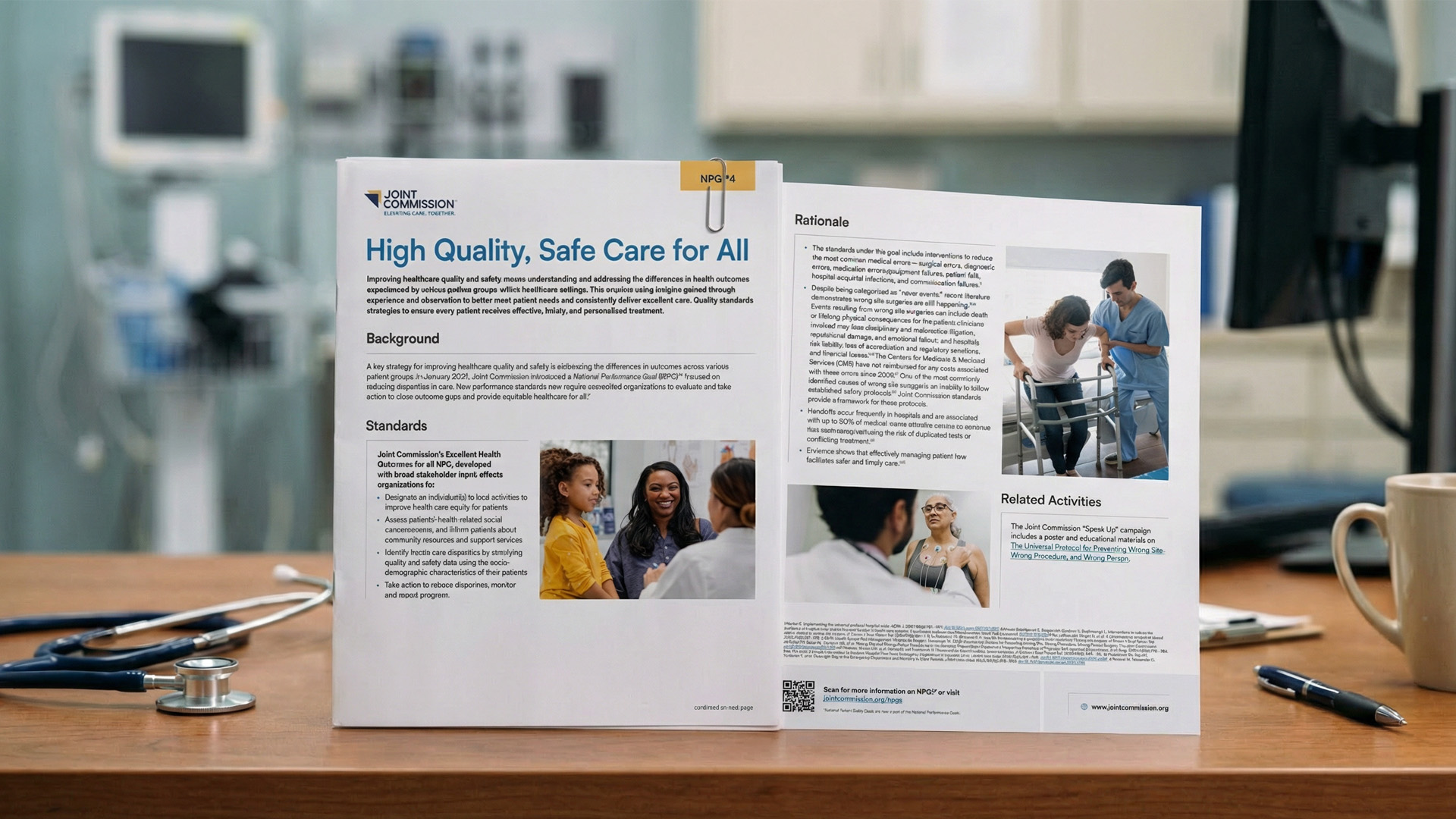
As of January 1, 2026, the Joint Commission’s updated National Performance Goals are now in effect. For hospital leaders, the shift changes how safety, quality, and readiness are evaluated across the organization.
And language access sits at the center of that change.
Most hospitals already offer interpreter services to meet federal requirements. What the 2026 standards make clear is that availability alone is no longer enough. Language access must function reliably across care settings, teams, and moments that directly affect patient safety and quality outcomes.
In our last update, we focused on the goals that explicitly reference communication and health equity. In this article, we look at the indirect implications: the goals that rely on effective communication to succeed, even when language access is not called out by name.
Direct Language Access Expectations Set The Foundation
Some of the Joint Commission’s 2026 expectations around language access are clearly defined. Goals 4 and 7 explicitly connect communication to health equity, informed consent, and patient understanding. Hospitals are expected to capture preferred language and communication needs, work with qualified interpreters, and provide information in ways patients can understand.
These requirements establish the baseline, but focusing only on these direct requirements can leave important gaps unaddressed.
Indirect Language Access Implications
While Goals 4 and 7 make language access explicit, other goals depend on effective communication to support safe care.
Goal 1: The hospital ensures that the correct patient receives the correct care at the correct time.
Patient identification, verification, and procedure time-outs rely on shared understanding. When patients cannot fully participate due to language barriers, the risk of misidentification and error increases. Reliable access to qualified interpreters during registration and procedural workflows helps reduce these risks.
Goal 2: The governing body and leadership team foster a culture of safety.
A culture of safety depends on open, multilingual communication when needed. If concerns, complaints, or feedback cannot be communicated in the patient’s preferred language, critical safety signals may be missed.
Goal 3: The hospital has an emergency management program.
Emergency situations require fast, clear communication. Multilingual alerts, American Sign Language (ASL) access, and the ability to activate interpreter services during drills and real events help ensure patients understand instructions and can respond appropriately.
Goal 6: The hospital prioritizes pain management and safe prescribing practices.
Pain assessments and medication counseling rely on clear communication. When these conversations do not happen in the patient’s preferred language, misunderstanding and misuse become more likely.
Goal 8: The hospital reduces the risk for suicide.
Behavioral health care depends on nuance, trust and accuracy. Screenings, risk assessments, and crisis interventions require patients to fully express and understand sensitive information.
Goal 12: The hospital is staffed to meet the needs of the patients it serves, and staff are competent to provide safe, quality care.
Staff competency includes recognizing language needs, knowing how to access interpreters, and documenting communication accurately. Clear guidance for bilingual staff and consistent training help ensure communication supports safe care across teams and shifts.
Goal 14: The hospital has a medication management program that focuses on safety.
Medication safety depends on patients understanding what they are taking and how to take it. Providing medication information and following up in the patient’s preferred language, and documenting interpreter service use, supports continuity of care and reduces preventable harm.
Across these goals, the pattern is consistent. When language access is unreliable, it affects outcomes that directly influence safety, quality performance, and accreditation readiness.