
At a roundtable in Chicago this fall, Dean M. Harrison, Equiti board member and former CEO of Northwestern Medicine, said something that stayed with us: "Language access in a hospital is like water. It needs to be there when you need it, and it needs to work."
It’s a simple and essential concept. But’s easy to overlook until it fails.
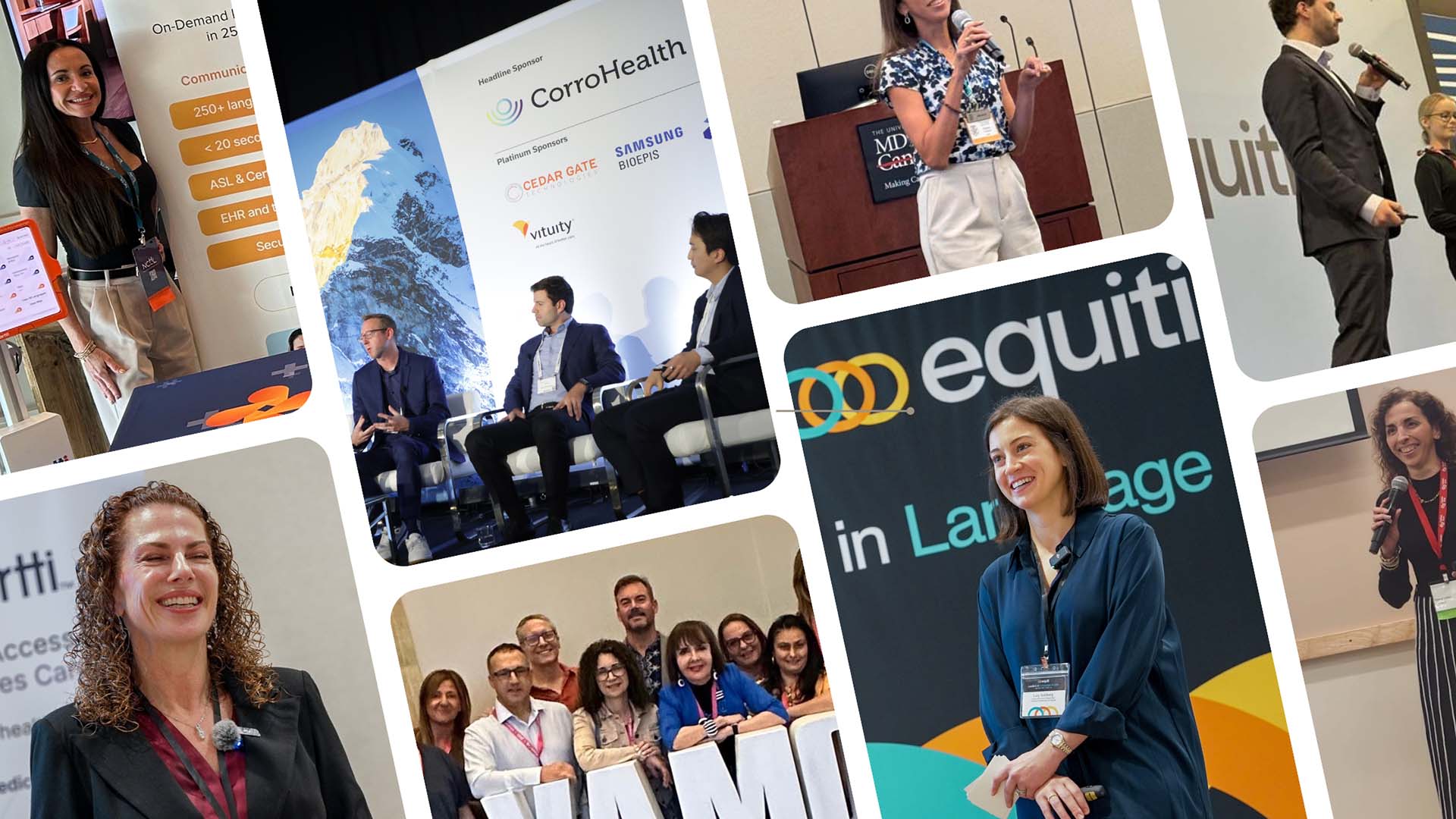
That moment at Becker's Health IT Conference captured why we showed up to over 50 events across the country in 2025 — and why we'll keep showing up. Language access leadership doesn't happen in isolation. It happens in rooms where language access leaders gather to advance professional standards, where health system executives discuss implementation opportunities, and where frontline staff share what actually works at the point of care.
This year, we listened more than we talked. And what we heard shaped how we think about our work.
What We Learned: Five Feet Changes Everything
At our Becker's roundtable, healthcare leaders talked about where language access breaks down. Not in policy, since most organizations have strong policies, but in execution.
A device sitting more than five feet from where care happens is less likely to be used. Five feet. That's the distance between intention and equity.
The lesson: Language access must be built into the physical and digital infrastructure of care. If interpreters aren't embedded in workflows — if access is buried five clicks deep in an EHR, or if devices aren't where clinicians need them — utilization drops. And when utilization drops, patients pay the price.
That insight came from listening to leaders describe what they see every day.
What We Heard: The Questions That Matter Most

At the Language Access Leadership Symposium in Atlanta, we convened healthcare leaders from across the Southeast to tackle the operational and strategic challenges of language services.
Debbie Lesser from Wellstar Health System walked through the complexity of multimodal access for Deaf and hard of hearing patients. Alison Arévalo-Amador and Lucy Goldberg from Children's Healthcare of Atlanta explained how interpreters and Child Life Specialists collaborate in pediatric settings where stakes are impossibly high. Julio Maldonado from ECU Health showed how hospitality principles transform patient experience when language barriers come down.
The questions from the room were sharp: How do you forecast language needs when immigration trends shift? How do you measure the effectiveness of language services beyond utilization rates? How do you get executive buy-in when ROI feels intangible?
These are some of the challenges language access leaders navigate every single day. And the expertise in that room — the lived experience of building programs, training staff, and advocating for resources — was the point. We didn't have all the answers. But together, the group moved closer to solutions.
What We Saw: Where AI Fits (and Where It Doesn't)

At Reuters Total Health, communication took center stage as a strategic performance driver. One theme surfaced repeatedly: the promise and limits of AI in interpretation.
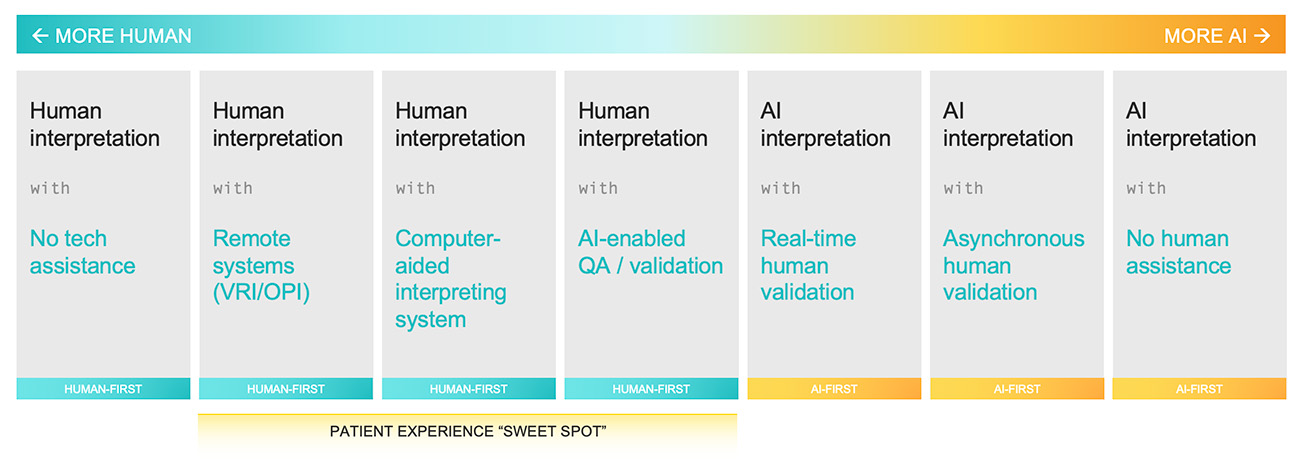
Ryan Beauchamp, Managing Director and Head of Product and AI at GTCR, framed it clearly during our Becker's roundtable. AI has a role, but only in the right places. Use it where it reliably speeds access and consistency: documentation support, captioning, quality review. Draw a hard line at moments that depend on cultural nuance and trust: consent, delivering diagnoses, complex decision-making.
The "sweet spot," as Beauchamp described it, exists on a spectrum. It's human-first, with AI assisting, not replacing, qualified medical interpreters.
That distinction matters. Because the temptation to automate communication is real, especially when health systems face workforce strain and budget pressure. But automation without guardrails doesn't just fail patients. It erodes trust, increases risk, and undermines the very equity language access is meant to create.
The conversations at Reuters and Becker's reinforced what we believe: technology should make human interpreters more present, not less.
Why We Show Up

Language access leadership is a collective effort:
- The interpreter associations setting professional standards.
- The health systems piloting integration strategies.
- The partners helping organizations navigate compliance.
- The technology partners building tools that fit into workflows.
Every one of these groups is pushing the field forward.
Our role isn't to have all the answers. It's to listen, learn, and bring what we hear back into how we build. The "five-foot rule" now informs how we think about device placement and workflow design. The questions about AI guardrails shape our product roadmap. The challenges leaders shared in Atlanta influence how we structure customer success and training.
Partnership is a practice, and practice requires showing up.
Because language access isn't like water by accident. It becomes essential infrastructure through deliberate, collaborative effort. And that effort requires all of us.