Click here to watch the webinar recording from our Language Access Leadership Webinar Series, featuring Covenant Health and additional panelists.
Addressing systemwide language challenges in diverse communities
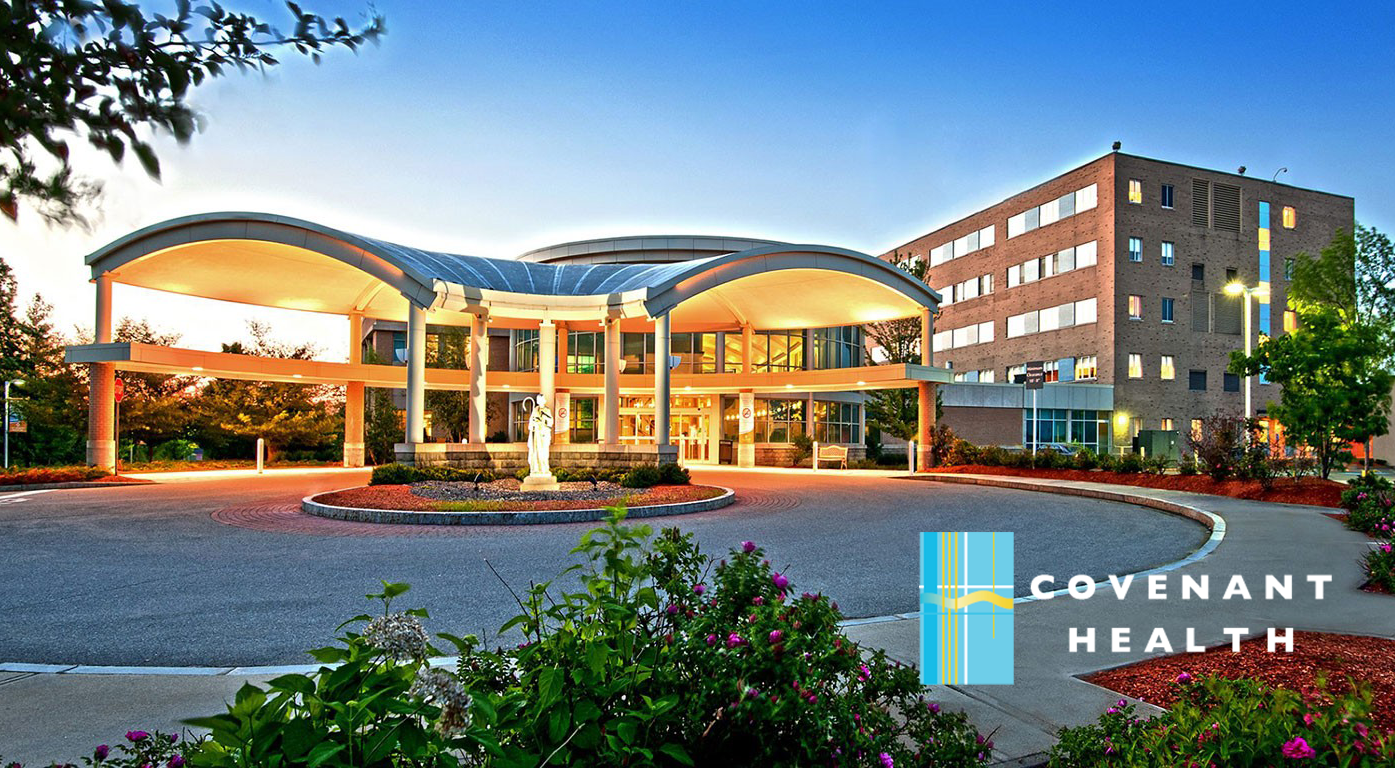
Covenant Health provides care across New England and parts of Pennsylvania, regions where language needs vary significantly and qualified medical interpreters are often scarce.
The system includes:
- 3 acute care hospitals and 13 post-acute locations
- Numerous ambulatory and outpatient practices across the region
- Mobile Health Clinic
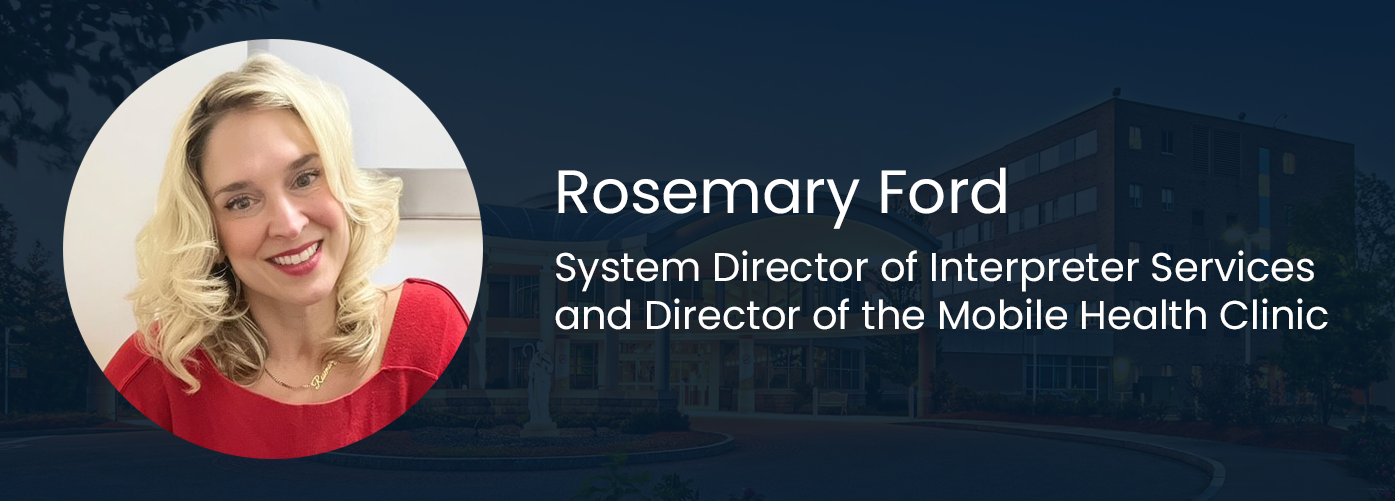
“We have hospitals that aren’t technically rural healthcare, but when you look at Bangor, Maine… there’s not a plethora of qualified medical interpreters that reside in that area,” said Rosemary Ford, System Director of Interpreter Services and Director of the Mobile Health Clinic.
These realities made it clear the system needed a dependable way to support all sites consistently, prompting Covenant Health to update and centralize its approach to language access.
A centralized model for enhanced access and reliability
To deliver comprehensive language support across acute, ambulatory, and post-acute settings, Covenant Health established a centralized call center.
“We have created a call center that provides systemwide language access for our acute, ambulatory, and post-acute locations,” Ford explained. “This initiative has not only strengthened our language access program but also generated robust data that has enabled us to expand our interpreter team.”
Centralized data collection has informed staffing decisions and guided strategic planning for interpreter services throughout the system.
Building interpreter capacity through training and mentorship
Because some regions lack qualified interpreters for specific languages, Covenant Health built an internal pipeline to grow talent.
“We really need to be creative… that might mean training somebody,” Ford said. “We take credentialing seriously, but because the local pool is limited, we’ve started a training program and a mentorship program.”
New interpreters complete formal medical interpreter training, start with lower-acuity encounters, and build toward full practice through mentorship with senior interpreters.
Leveraging data for informed budget and resource decisions
Ford emphasized that interpreter services must be predictable and transparent for leadership. “I do monthly reports tracking scheduled and unscheduled encounters, minutes, modality use, and language diversity.”
With over 15 years of accumulated data, Covenant Health can effectively illustrate trends in demand, costs, and language needs, ensuring interpreter services have a strong voice in budget and quality discussions.
Incorporating patient feedback to drive program enhancements
Patient feedback has helped shape Covenant Health’s approach, particularly for the Deaf and hard-of-hearing community. Patients shared challenges when working with interpreters who were fluent in ASL but unfamiliar with regional signing variations common in New England.
In response, Covenant Health employs staff interpreters who are fluent in both ASL and local signing dialects to support clearer, more accurate communication.
These changes reflect Ford’s belief that interpreter services must be shaped by the people who rely on them most.
Takeaways
Covenant Health’s experience illustrates several strategies relevant to regional and multi-site health systems:
- Centralization can provide greater visibility and help standardize access.
- Internal training pipelines can address shortages in local interpreter talent.
- Comprehensive data supports transparent budgeting and staffing decisions.
- Patient feedback can meaningfully shape service design.